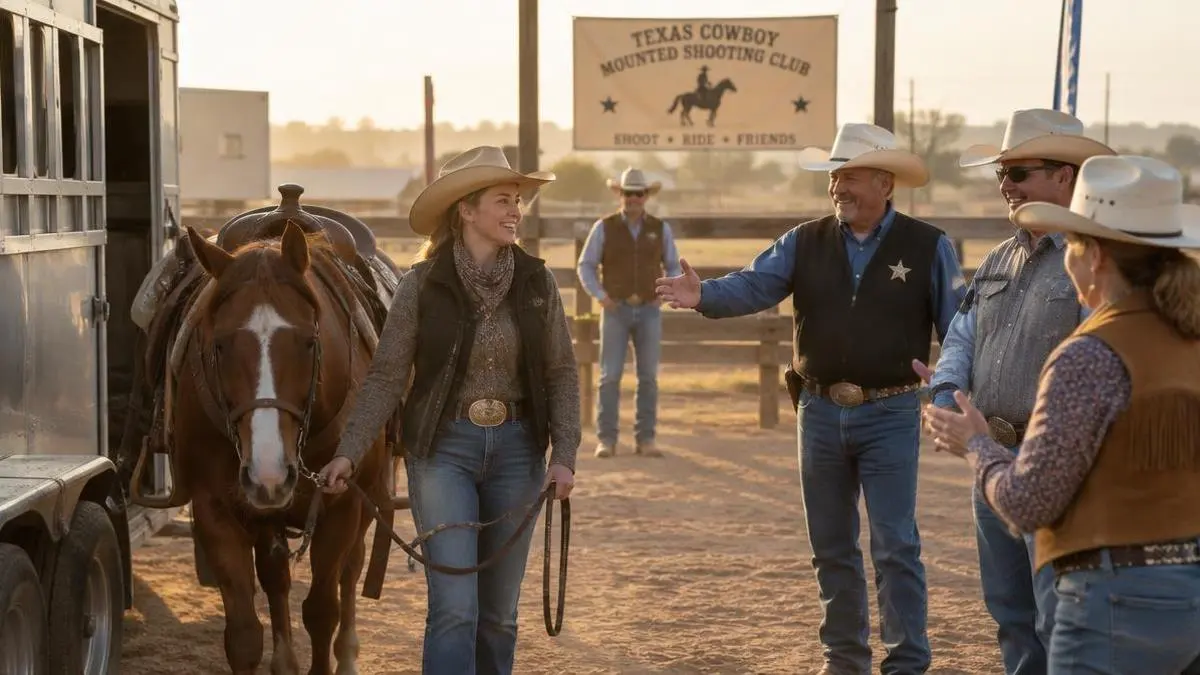
Arriving at your first Cowboy Mounted Shooting club shoot can feel like walking into a conversation that everyone else already understands. It is not. Every experienced rider was once the person asking where to park, how registration works, and whether the horse will stand quietly near the firing line. A club shoot is designed to be a welcoming practice and competition day, and knowing the rhythm of the event removes most of the uncertainty.
Before You Leave Home
Start by checking the event notice before you leave home. Confirm the address, arrival time, entry deadline, current membership rules, and what paperwork is required. Pack water for yourself and your horse, a lead rope, grooming supplies, a first-aid kit, and enough time to unload without rushing. Your horse will learn from your pace. If you arrive calm and early, you have room to walk the grounds, find the secretary’s table, and let your horse look at the arena before the action begins.
Registration and the Rider Briefing
Registration is usually the first formal step. The secretary will confirm your class, collect the entry fee, and explain the order of events. Ask questions while you are there. It is much easier to clarify a rule at the desk than to worry about it from the saddle. Many clubs offer a safety briefing or a short walk-through for newcomers. Listen closely to instructions about the warm-up area, where spectators may stand, and when horses are allowed near the firing line.
Warm Up for Confidence
The warm-up is not a race. Give your horse time to settle, loosen its back, and notice the balloons, banners, speakers, and other horses. Practice transitions, stops, and turns before you think about speed. If your horse is tense, make the pattern smaller and simpler. A confident, controlled run is more useful than a fast run that leaves both of you anxious. It is completely acceptable to scratch a class or take a slower pass when safety or confidence requires it.
Your First Run
When your name is called, take one breath before entering the arena. Ride the course you walked, keep your eyes ahead, and let your horse move in a straight line between turns. The first goal is not a score. It is to finish with a horse that understands the experience and a rider who knows what to practice next. Officials are watching for safe horsemanship and correct procedure, not perfection from a first-time competitor.
Review the Day and Return
After the run, reward your horse and give yourself a moment to review what happened. Write down where the horse sped up, where you lost a line, and what felt comfortable. Watch another rider if you can; the most useful lessons are often visible from outside the arena. Notice how they prepare, how they enter a turn, and how they breathe when the pace changes.
Club shoots are also social events. Introduce yourself, thank the range crew, and ask another member about tack or training. Most riders are happy to share a practical tip, especially when the question is specific. You may leave with a new exercise, a better warm-up plan, and a few names to recognize at the next event.
Your first shoot should give you a clear next step. Maybe that step is practicing a balanced stop, teaching a calmer stand, or simply returning for another day. Progress comes from repeating small, safe experiences. Show up prepared, listen carefully, and measure success by the partnership you build with your horse. The score will improve as a natural result.
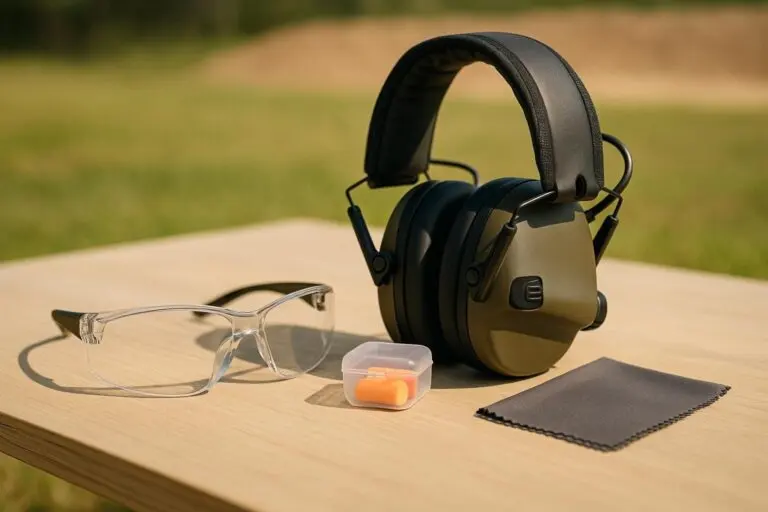
Before you leave, check the small details that are easy to overlook. Make sure your holster, ammunition, eye and hearing protection, and required paperwork are packed in one place. Ask the club whether a loaner horse, loaner gear, or a novice orientation is available. A short phone call can prevent a long drive with the wrong equipment. Keep a printed copy of the pattern and the day’s schedule in your tack bag in case reception is poor at the range.
Spend time observing the arena from several angles. Walk your horse near the entrance, the announcer’s stand, and the warm-up rail, but never crowd another horse. Let the horse investigate at its own pace while you reward a quiet step or a relaxed breath. This is useful preparation even if you have ridden in an arena before, because each club has different footing, fencing, sound levels, and traffic patterns.
Ask the range officer where a beginner should stand and when it is safe to cross the arena. Safety rules are part of the sport’s culture, not a test designed to embarrass newcomers. If a command is unclear, repeat it back so everyone knows what you heard. A careful question shows respect for the crew and helps the entire class run smoothly.
Finally, give yourself permission to enjoy the day without comparing your first score with a seasoned competitor’s time. Take photographs, thank the volunteers, and write down one success before you leave. Returning with a calm horse and a practical training goal is a successful first club shoot, even when the scoreboard does not yet show your ambition.
One practical habit pays off at every future event: prepare a short question list before you arrive. Ask where to warm up, how the class order works, and what to do if your horse needs a break. Write the answers down instead of trying to remember them while the arena is busy. That habit turns a first visit into a repeatable routine and makes the next club shoot feel familiar from the moment you unload.
Texas Smokin' Guns