
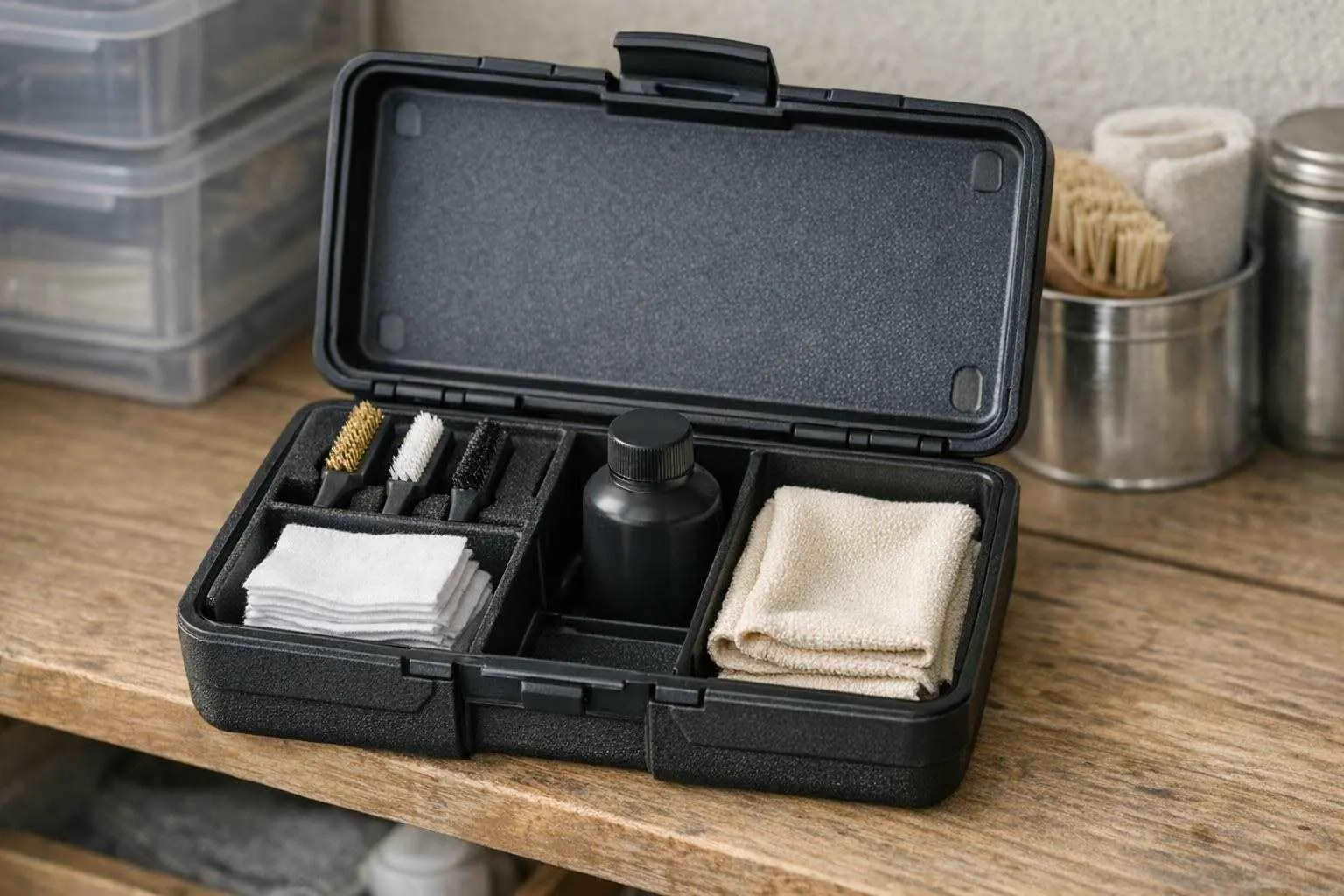
Although it seems trivial at first, a bottle of solvent on a family's laundry shelf, a cleaning rod lying about in the equipment store, or ammunition put into the same trash bin as maintenance trash can create a lot of problems in normal family life. That is why it is so important to set up a sensible storage system for firearms that does not pose any problems in daily life and that children, visitors, etc. are not in danger of. Although it may seem obvious, good organization does not have to make life more difficult for owners of firearms. Simply setting up a sensible system of controlled access, checkable storage, and clear separation of all items is usually sufficient.
Start with an access map, not a storage bin
Make an access map. Who has access to the area? What do they need to access? Separate these into three groups of contents. The first group consists of the firearm and all its parts that need to be stored with it. The second group consists of ammunition, which in most cases should be stored in a separate container from the firearm. The third group consists of all cleaning supplies and other tools (solvents, lubricants, patches, brushes etc.).
Separate the contents into three groups:
– The firearm and any components that require controlled access.
– The ammunition for all firearms at home stored separately from the gun(s) and protected from children and other unauthorized persons.
– Cleaning supplies and tools such as solvents, lubricants, patches and cleaning brushes and small parts.
By segregating the contents into three groups, one will realize that everything associated with a firearm is not part of a single hobby kit that can be locked away in a range bag or a locked box of tools. While a locked container of tools is a good thing, it does not constitute adequate storage of firearms. In addition, solvents and small parts can be very hazardous to very young children and to pets. A good way to handle the cleaning supplies and tools would be to have all of them be stored in their original containers and locked away in a separate area of the house. But that would defeat the purpose of this discussion.
Choose storage that controls access and confusion
A hard-sided case with a lock is generally better for storing long periods of time for gun cleaning than a soft range bag. Sure, a soft range bag is useful for carrying items to and from a range but they can be moved around easily and even left open. A lockable, hard-sided case with clear labeling on the outside makes for a great storage place for gun cleaning supplies and reduces rummaging through.
Locking cases of different sizes are available to fit into different homes. Often a workshop will have more space available and so a locked cabinet could be the best option. However this must be situated in a controlled location and an access plan put in place for when you are not around.
Divide tools into small parts such as (end) brushes, (gross) patches, (small) cotton swabs, and manufacturer specific tools etc. Store each category in separate smaller pouches. This way loose brushes or metal picks etc. cannot get lost in the midst of other random tools and be mistaken for household items. This also allows one to easily note that a tool is missing when searching for it for maintenance.
Keep chemicals, tools and ammunition in their own lanes
Venting information and how to dispose of solvents and other firearm maintenance products must also be read and heeded by whomever is to use such materials for cleaning firearms. Their containers must always be closed and stored upright in their original packaging. Solvents and oils, for example, should never be stored near food or sources of heat and must be kept out of the reach of children and pets.
Ammunition separation is an easy rule to implement and very beneficial. Storing the cartridges for a firearm in a separate area or container from the rest of the supplies for maintenance of that firearm until use helps to keep them from getting lost in the supplies or scattered about the work surface. Ammunition should not be picked up while disassembling, inspecting, or lubricating a firearm.
Small parts should be put away in their own little trays and placed in their respective containers or put back in their respective cases, for the small parts to be put away is part of the process of cleaning up after the maintenance has been performed. Do not leave the small parts scattered about on the work surface or floor where they could be lost or even more hazardously picked up by a child or pet.
Build a repeatable maintenance station
No gun cleaning station is necessarily better than another, but a clean surface and good lighting will always be better than a crowded workbench with many other tools and too much clutter. Remove all ammunition from the work area before beginning any gun cleaning. Ensure the gun is unloaded according to the manufacturer's instructions before beginning any cleaning or maintenance. Keep the muzzle of the firearm pointing in a safe direction at all times while cleaning. If in doubt about the condition of the firearm or the best way to clean or maintain it, refer to the owner's manual or seek the advice of a qualified firearms repair person.
Keep an absorbent mat or container to hold spills and cleaning wipes. A simple tray can hold small parts during disassembly and reassemble. Keep only the required cleaning materials for the job at hand on the work surface. If you bring out a bunch of solvents and various cleaning materials, chances are you'll get confused as to which one to use and end up using the wrong one for the job or worse yet, leave it open.
It may be helpful to create a check list to help work through the activities listed above in the event that you are disrupted from your shooting maintenance activities in your home. This does not replace all the proper safety items to ensure proper firearm safe handling. However this simple list will help keep you on track in the event of an unexpected disruption to your activities.
Plan for interruptions and shared routines
Yes. Interacting with family members and experiencing unexpected household events can uncover real weaknesses in a planned gun cleaning up system. Interrupt a gun cleaning task in progress if someone enters the room or if you are called away from the location for other reasons within the home. Stop at the last possible moment and make sure that all open chemicals, ammunition and firearms are locked up prior to departing.
Inform others as to what your locked containers hold. It is not necessary to give them access, simply to understand what you are storing in case of an emergency. Don't let your well-meaning significant other or roommate move a range case, or treat a disassembled rifle's cleaning rod as a toy to sweep up. Ditto for your guests and children. House rules must be clearly defined for visitors and toddlers alike.
Try to review your rules regularly, especially if you experience any change in your household, i.e., children, pets, other gun owners or even a simple move to a different house. Remember to always verify the requirements on the storage, transport and related items of firearms and accessories in your area, as they are subject to change.
Know when organization is not enough
While organizing your tools is important, they can also indicate whether you are using good maintenance practices. Discarding out-of-date, deteriorating or damaged solvents, lubricants, etc., as specified on the container, is very important. Also, discard any supplies that have become contaminated, etc. Don't try to make do with a tool that was not designed for your firearm.
As with any thing, cleaning a firearm can be easily turned into an exercise in modifying or experimenting with it. If you're ever in doubt as to the safe operation or repair of a firearm, it's best to seek the advice of a qualified firearms repair person.
An organized range of maintenance tools for a firearm does not in itself make the firearm safe. A well-organized gun cleaning kit supports safe practices by controlling access, storing ammunition separately, facilitating the identification of all supplies and making it easy to return the work area to its original state after maintenance.
Texas Smokin' Guns